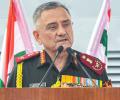
Possible convergence of interest among China, Pakistan, and Bangladesh may result in serious implications for India's stability and security dynamics, Chief of Defence Staff General Anil Chauhan said on Tuesday.
'It could take the form of sporadic LoC violation through heavy artillery and mortar fire, focusing on border villages where the Hindu Dogra population is predominant.'
'The government has to explain (to the army, air force and navy chiefs) whether they want a punitive strike, a deep punitive strike, or whether they want limited war or an all-out war, will it be a circumscribed war or will it be a shallow attack along the border.'
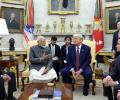
'As one former Indian diplomat put it to me, Delhi has access to the White House, but Islamabad has access to Mar-a-Lago.'
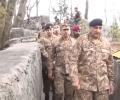
General Bajwa gets inputs from his senior officers, but he has the final word, notes Rana Banerji, who headed the Pakistan desk at the Research and Analysis Wing, India's external intelligence agency.
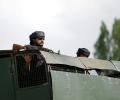
'Whatever we do, the purpose will be to re-establish deterrence.'

Chief of Defence Staff General Anil Chauhan emphasized the need for constant high military preparedness, citing Operation Sindoor as an ongoing example. He also highlighted the importance of 'information warriors, technology warriors and scholar warriors' in future warfare.

The last word may not have been said on the churnings within the Pakistan army or the extent to which army chief General Asim Munir is in control, notes Rana Banerji, who headed the Pakistan desk at RAW, India's external intelligence agency.

The Congress party launched a scathing attack on the central government regarding the Pahalgam terror attack and Operation Sindoor, demanding accountability from Home Minister Amit Shah and clarification on the number of Indian jets downed during the operation.

The BJP accused Rahul of insulting the armed forces with his "surrender" barb at Prime Minister Narendra Modi.

BCCI secretary Devajit Saikia said that an invitation has been extended to chiefs of all three Armed forces, top-ranked officers and soldiers for the IPL 2025 final on June 3.
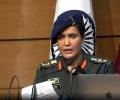
In a composed and clear presentation, Colonel Sofiya Qureshi announced that nine terrorist facilities had been destroyed in the tri-services operation.

A senior leader of the ruling Pakistan Muslim League-Nawaz (PML-N) on Wednesday claimed that the military operation against India was designed under the supervision of the party president Nawaz Sharif.

'All Pakistan army chiefs follow a consistent line as far as India is concerned.'

Meanwhile, a precautionary blackout has been enforfced in the multiple areas amid the esclating tensions between India and Pakistan.
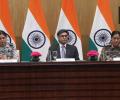
Colonel Sofiya Qureshi revealed that 300 to 400 drones were deployed across 36 locations, with several being shot down by Indian forces using both kinetic and non-kinetic methods.

The highlight of Tuesday's debate on Operation Sindoor was the speech by Prime Minister Narendra Modi, with the rebuttal by Congress's Wayanad MP Priyanka Gandhi coming a close second.
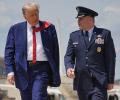
He then went on to say that, however, he won't get a Nobel Peace Prize for any of his efforts.

Pakistan plans to procure 40 jets of advanced Chinese stealth fighter J-35, which, if materialised, will mark the first export of China's latest jet. The sale would mark Beijing's first export of fifth-generation jets to a foreign ally and is expected to recalibrate regional dynamics, particularly in relation to Pakistan's rival India. The acquisition of new aircraft was pursued despite the serious economic crisis faced by Pakistan. China has helped Pakistan to jointly develop and operate the J-17 Thunder fighter jet, the mainstay of the PAF. China has delivered four advanced naval frigates to the Pakistan Navy in the last few years to enable it to play a bigger role along with its navy in the Indian Ocean and Arabian Sea.
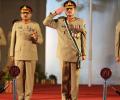
The launch of the first-ever direct train service from Delhi to Kashmir would be a big turning point in the Valley's mood and its integration with India. He had to thwart it at any cost, asserts Shekhar Gupta.
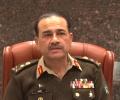
The Pakistan Army chief arrived in Washington last week on his first official visit to the US.

Strategic affairs experts express concern over US President Donald Trump's tariffs on India, his 'bullying tactics,' and increasing attempts to hyphenate New Delhi with Islamabad, signaling a potential shift in the bilateral relationship.
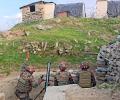
'With a military-led strategy to counter terrorism emanating from Pakistan, India has clearly signalled that it would respond decisively to future terrorist threats.'
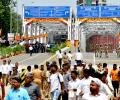
The reconstructed Carnac Road overbridge in South Mumbai has been renamed as Sindoor Bridge, a name inspired by India's military action against Pakistan to avenge the Pahalgam terror attack.

Parts of Rahul Gandhi's speech during the Operation Sindoor discussion in the Lok Sabha were expunged from the record after he criticised the government for trying to protect Prime Minister Narendra Modi's image.
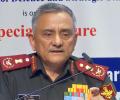
Pakistan's decision to talk to India on May 10 stemmed from realisation that it will suffer more if its operation continues, Gen Chauhan said.
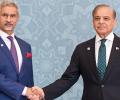
Shehbaz made the comments during a visit to the Kamra air base in the country's Punjab province where he interacted with officers and soldiers involved in the recent military confrontation with India.
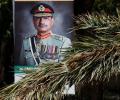
Khan said the events of May 9, 2023, in which military installations were targeted, were in fact a part of the "London Plan"- the sole purpose of which was to "eliminate Pakistan's largest political force, the Pakistan Tehreek-e-Insaf".
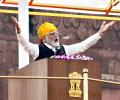
The invitation cards for the 79th Independence Day celebration also carry the Operation Sindoor logo, and the water mark of Chenab bridge to exemplify the rise of 'Naya Bharat'. Floral decorations at the venue will also be based on 'Operation Sindoor'.
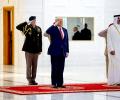
'He is intrigued by the intractability of Kashmir issue. With his interest in dealmaking and peacebrokering, he sees it as an exciting challenge to tackle.'
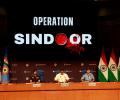
The logo for India's Operation Sindoor, which has captured the imagination of millions, was designed by two Armymen. The operation, a decisive military action against terror camps in Pakistan and Pakistan-Occupied-Kashmir, was launched in response to the Pahalgam massacre. The logo, featuring a bowl of vermilion, has become a powerful symbol of India's resolve against terrorism.
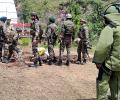
The officials said dozens of unexploded explosives were destroyed by the experts along the Line of Control in Rajouri and Poonch districts and along the International Border in Jammu and Samba which witnessed intense cross-border shelling and drone attacks from May 7 to May 10.
'Unlike the surgical strikes and the Balakot air strikes across the LoC, we have gone further inside Pakistan and raised the bar of escalation.'
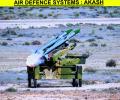
'The Pakistanis called the US state department and said we agree with India on peace.' 'It was then that US President Donald Trump jumped in and took credit for the ceasefire.'

In July, the Pakistan government's debt swelled to USD 2.44 billion, including USD 2.07 billion in non-guaranteed debt owed to China, as per Geo News.
Addressing a special 'Youm-e-Tashakur' event at the Pakistan Monument in Islamabad, Shehbaz said that India and Pakistan fought three wars and got nothing.
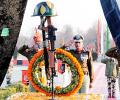
The 2003 BSF operation that eliminated terrorist Gazi Baba in Jammu and Kashmir, the subject of an upcoming action film, "Ground Zero," crippled the Jaish-e-Mohammed. The mission, which earned the BSF a dozen gallantry awards, is being portrayed in the film releasing on April 25. The operation, described in the BSF's 50th anniversary book, involved a daring raid on a house in Srinagar where Gazi Baba was hiding. The BSF faced heavy gunfire and grenades, with officers sustaining injuries and one constable, Balbir Singh, being killed while protecting his superior officer, Narendra Nath Dhar Dubey. Dubey, who led the operation, received the Kirti Chakra, India's third highest peacetime gallantry award.
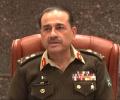
Aware of simmering dissensions within the top echelons of the army, Munir has moved slowly in reshuffling senior generals, observes Rana Banerji, who headed the Pakistan desk at RA&W, India's external intelligence agency.

The Pakistan army is staring at the greatest, scariest, existential threat to its power in their country. This threat has come from a populist riding democratic power, observes Shekhar Gupta.

The Indian government has dismissed claims of a suicide attack on an Army brigade in Jammu and Kashmir and a drone attack in Punjab as "fake news." The Press Information Bureau's Fact Check Unit found the claims to be false and attributed the spread of disinformation to coordinated efforts by certain social media handles and mainstream media in Pakistan. The government urged citizens to rely on verified sources and refrain from sharing unverified content.
 © 2026 Rediff.com - Advertise with us - Disclaimer - Privacy Policy - Sitemap - Feedback - About us - Terms of use - Grievances